
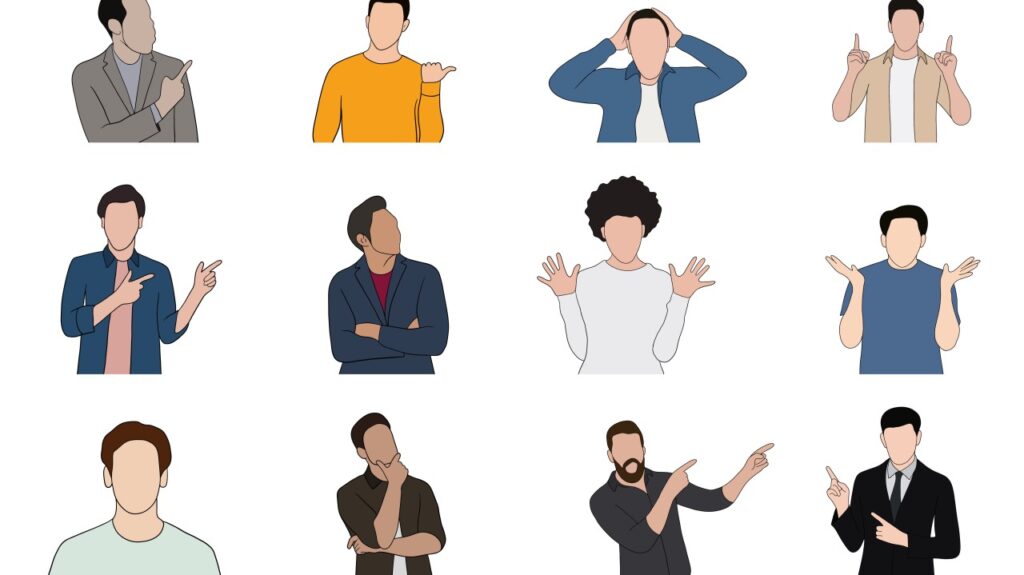
Managers, colleagues and clients are all communicating something long before they speak. If you learn to read people’s body language, the workplace becomes far easier to navigate.
Research consistently shows that the majority of communication is nonverbal. Between 65 and 90 percent of meaning is conveyed through posture, facial expression and tone of voice. Words still matter, but behaviour often reveals the emotional context behind those words. This is why the same sentence can feel supportive, dismissive or confrontational depending on how it is delivered.
Body language is not mind reading. It will not reveal every hidden thought. What it does offer is valuable context. When you learn to notice patterns in posture, gestures and facial expressions, you start to understand when someone feels confident, defensive, engaged or uncomfortable. In fast moving work environments, that awareness can make communication clearer and decision making easier.
Below are some of the most common body language signals that appear in professional settings and what they can reveal about the dynamics in a room.
Recognising Confrontation Early
The Lip Purse
A lip purse happens when someone presses their lips tightly together into a thin line. It is a subtle facial expression that often appears for only a moment before someone resumes a neutral expression.
In workplace conversations this gesture frequently appears when someone is holding something back. They may disagree with a point being made, feel uncomfortable about a decision or believe it is not the right moment to express their true opinion. The lip purse can also appear when someone hears information they do not fully approve of but chooses not to interrupt the discussion.
When you notice this cue, it is often a signal that the conversation has not surfaced every viewpoint in the room. Instead of pushing forward with assumptions, it can be useful to create space for additional input. Asking a neutral question such as “What are your thoughts on this?” or “Is there anything we might be missing?” often allows the person to share what they initially held back.
The Chin Jut
The chin jut occurs when someone pushes their chin forward slightly while speaking or listening. It can be a subtle movement but it is frequently associated with confidence mixed with challenge.
In tense discussions the chin jut can signal that someone feels strongly about their position and may be preparing to defend it. It is a gesture that communicates readiness to confront an issue directly. In high pressure environments such as project meetings or deadline discussions, it often appears just before a more assertive statement.
Recognising this cue early allows you to adjust the tone of the conversation. Instead of escalating tension, you can shift the discussion toward collaboration by acknowledging the concern and inviting constructive input. When people feel heard, the need to defend their position often softens.
The Battle Stance
The battle stance is the familiar posture where someone places their hands on their hips with their feet planted firmly apart. It is a posture designed to take up space and project confidence.
In workplace situations this stance often appears when someone feels the need to assert authority or defend their position. The body becomes larger and more grounded, signalling territorial confidence. In heated conversations this posture can amplify the emotional tone of the exchange.
When you notice the battle stance during a discussion, it often indicates that emotions are beginning to rise. Rather than matching the intensity, the most effective response is usually to slow the conversation. A calm tone, a brief pause or a shift towards problem solving can reduce tension before the situation escalates further.
Mismatched Signals
One of the most revealing body language cues occurs when someone’s words and body language do not align. For example, a colleague might say they are comfortable with a proposal while subtly shaking their head or avoiding eye contact.
These inconsistencies are not always signs of dishonesty. More often they signal hesitation, uncertainty or internal conflict. The person may genuinely want to support the idea but still feel uneasy about certain aspects of it.
When you notice this kind of mismatch, curiosity is far more useful than accusation. Asking follow up questions and inviting open feedback often brings hidden concerns into the discussion. Addressing those concerns early can prevent misunderstandings later.
Building Rapport Through Body Language
Mimicry
Mimicry is the natural tendency for people to mirror the posture, gestures or tone of someone they feel comfortable with. When two colleagues lean forward at similar moments or adopt similar hand movements during conversation, it is often a sign that rapport is developing.
This behaviour happens largely on a subconscious level. Humans evolved to synchronise with people they trust because it strengthens cooperation and social bonding. In professional settings mimicry can be a powerful indicator of whether two people feel aligned.
You can also use light mirroring intentionally to build connection. Matching someone’s speaking pace or adopting a similar posture can help conversations feel more natural. The key is subtlety. The goal is to create comfort, not imitation that feels forced.
Touch
Appropriate touch can communicate encouragement and support, although it must always be used carefully in professional environments. A brief and respectful touch on the arm or shoulder has been shown in some studies to increase cooperation and willingness to help.
In modern workplaces however cultural expectations and organisational policies vary widely. For that reason many professionals rely more on verbal encouragement and positive body language instead.
What matters most is the intention behind the interaction. Warm eye contact, a genuine smile and open posture often create the same sense of connection without crossing personal boundaries.
Nonverbal Agreement
Agreement is often communicated through posture long before someone says the word yes. Nodding the head, leaning slightly forward and maintaining open body language are common signals that someone is receptive to what is being discussed.
These signals are particularly useful during presentations or meetings. A room that displays open posture and frequent nodding usually indicates that participants are engaged and following the conversation. On the other hand, rigid posture and minimal movement can signal confusion or disconnection.
Leaders who use open gestures and relaxed posture themselves often encourage the same behaviour in others. Body language tends to spread through groups, so modelling openness can influence the atmosphere of the entire meeting.
Torso Orientation
Where the body points often reveals where attention lies. When someone turns their torso fully toward a colleague during conversation, it signals interest and respect. When the body angles away, it can suggest divided attention or disengagement.
In group settings this cue becomes particularly important. People naturally turn their bodies toward the person they feel most connected to in the conversation. If you want to include someone in a discussion, turning your torso toward them is a simple yet powerful signal that invites participation.
Leaders who consciously orient their body toward speakers during meetings often create more inclusive discussions. It signals that each voice in the room is worth attention.
Power Signals in the Workplace
The Professional Handshake
Despite the rise of digital communication, the handshake remains a powerful first impression in many professional environments. A balanced handshake involves a firm grip, brief eye contact and a vertical hand position where neither person’s hand dominates the other.
When one person turns their palm downward during a handshake, it can subtly communicate dominance. On the other hand, a weak grip can sometimes be interpreted as uncertainty or lack of confidence.
A neutral handshake signals equality and professionalism. It sets a tone of mutual respect at the beginning of an interaction, which is exactly what most professional relationships require.
The Steeple Gesture
The steeple occurs when someone brings their hands together and presses their fingertips lightly against each other while keeping the palms apart. It is a gesture frequently associated with confidence and authority.
You often see this posture during thoughtful moments in meetings or presentations. Leaders sometimes adopt it naturally when they are explaining ideas or evaluating information. The stillness of the gesture communicates composure and certainty.
When used sparingly, the steeple can help reinforce a sense of calm authority. However, exaggerated or constant use can appear theatrical. Like most body language signals, moderation is what makes it effective.
Eye Contact
Eye contact is one of the most powerful tools in professional communication. Steady but relaxed eye contact signals attentiveness, honesty and confidence.
Avoiding eye contact, particularly during important moments of conversation, can sometimes signal discomfort or uncertainty. However context matters. Cultural norms and personality differences influence how people use eye contact, so it should always be interpreted alongside other signals.
During presentations and meetings, balanced eye contact helps speakers maintain connection with their audience. It shows that the conversation is shared rather than delivered at a distance.
Territorial Behaviour
Territory in offices is often expressed through subtle behaviours. People may lean on shared objects, stand near entry points or position themselves around communal areas such as coffee stations or meeting spaces.
These behaviours can signal informal status within a team. Individuals who feel confident in their role are often more comfortable occupying visible spaces. Leaders sometimes use these areas strategically to interact with team members and remain approachable.
Understanding these dynamics helps explain why certain individuals naturally become central figures in office environments. It is not always about title. Sometimes it is simply about presence.
Signals of Status and Comfort
Smiling
Smiling plays a complex role in professional communication. It can signal warmth, openness and approachability, all of which are valuable in collaborative environments.
At the same time context matters. Constant smiling during serious discussions can occasionally reduce perceived authority. Many experienced leaders balance friendliness with moments of neutral expression to maintain credibility.
The key is authenticity. A genuine smile used at the right moment builds connection far more effectively than a forced one.
Arm Folding
Crossing the arms creates a barrier across the body and is often interpreted as defensiveness. In meetings or negotiations it can suggest that someone feels uncertain, resistant or protective of their viewpoint.
However this posture does not always signal negativity. Some people cross their arms simply because it feels comfortable or because the room is cold. For that reason it is important to observe patterns rather than relying on a single gesture.
If arm folding appears alongside other signals such as minimal eye contact or short responses, it may indicate that the person feels disengaged from the discussion.
Subtle Status Displays
True authority in the workplace is often communicated through subtle signals rather than dramatic gestures. Senior professionals frequently display confidence through calm posture, measured movement and controlled gestures.
These individuals rarely feel the need to dominate space or exaggerate their presence. Instead their authority comes from composure and clarity. Their body language communicates that they are comfortable in their role and do not need to prove it.
Observing these subtle behaviours can be surprisingly instructive. The most effective leaders often project confidence through quiet consistency rather than visible dominance.
Why Face to Face Communication Still Matters
Modern workplaces offer countless ways to communicate. Messaging platforms, email, phone calls and video meetings all play a role in keeping teams connected.
However important conversations often benefit from face to face interaction. When people speak in person they communicate far more emotional nuance than written messages allow. Tone of voice, facial expression and body language all work together to convey enthusiasm, empathy and humour.
Text based communication removes most of those signals, which is why misunderstandings occur more easily in email or messaging threads.
For complex discussions, performance feedback or strategic conversations, meeting in person remains one of the most effective ways to ensure clarity.
Final Thoughts
Professional environments can be complex and sometimes challenging to navigate, but being able to recognise these nonverbal cues can make interactions clearer and conversations easier to manage.
Understanding how people communicate through posture, gestures and facial expressions often helps you respond more effectively and build stronger working relationships. You begin to recognise when someone feels confident, hesitant or disengaged. It is that awareness that allows you to respond more thoughtfully and navigate workplace dynamics with greater confidence.
About OutSec
OutSec is the UK’s leading online transcription company whose business has grown substantially since its inception in 2002. We are now one of the most successful transcription companies in the United Kingdom.
OutSec provides secure outsourced transcription services to the medical, legal, property and surveying, universities, media and interviews, advisory boards, conferences & seminars, inventories, financial, corporate, HR, recruitment and Executive Search sectors.
Accounts are free, you pay on a per-minute basis (rounded to the nearest minute) on a pay-as-you-go basis, with no contracts or minimum spend. So why not open an account today?
We also provide a boutique Virtual Personal Assistant Service, Crystal Clara, for those who require a more personal and tailored service.
Image by Freepik